
Medical Office Cleaning in Charlotte, NC
Evening and weekend cleaning for doctors' offices, outpatient and specialty clinics, urgent care centers, and physical therapy practices.
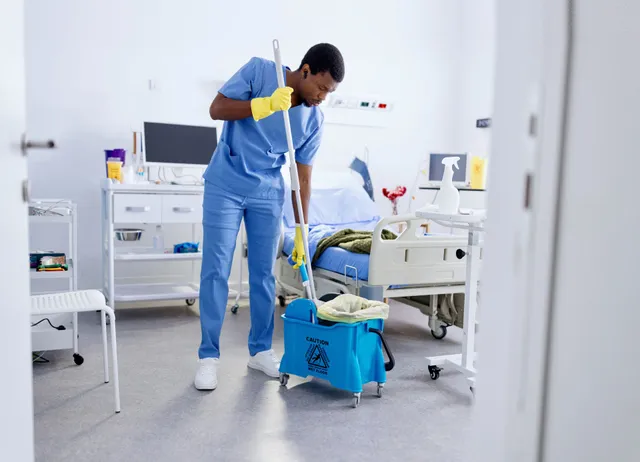
Blue Oak Solutions provides medical office cleaning in Charlotte, NC, with a written cleaning plan built around your practice's schedule. We clean on evenings and weekends, after patients and providers have gone home, and we use EPA-registered disinfectants.
A medical office needs more than a standard commercial cleaning routine. Sick and healthy patients share the same waiting room, and the same door handles, counters, and restroom fixtures are touched all day. Whether you run a single doctor's office or a multi-provider clinic, a good plan puts the most attention on those surfaces and draws a clear line between what your clinical staff handle and what the cleaning crew handles.
What You Can Expect From Blue Oak Solutions
- Family-owned, locally owned and operated, and based in Charlotte, serving North Carolina businesses for more than 10 years
- Licensed, insured, and bonded
- Trained, uniformed, background-checked employees
- A cleaning plan built around your practice's schedule, on evenings and weekends
- EPA-registered disinfectants and electrostatic spraying, plus eco-friendly products and green cleaning options
- Quality checks and supervisory inspections against your written plan
- A free walkthrough and a written estimate
What a Medical Office Cleaning Plan Covers
Every practice is laid out differently, so the plan is written room by room. A typical plan covers these areas:
- Waiting room and reception: check-in counters, chair arms and seats, door handles, push plates, light switches, and entry glass, plus trash, vacuuming, and mopping.
- Exam and treatment rooms: counters, sinks, faucets, dispensers, cabinet fronts, chairs, rolling stools, and exam table surfaces and bases once staff have cleared paper, linens, and instruments.
- Restrooms: toilets, sinks, faucets, flush handles, grab bars, baby-changing stations, and dispensers cleaned and disinfected, with paper and soap restocked. The outside of a specimen pass-through door is wiped, and anything inside is left for staff.
- Labs and nurse stations, surfaces only: counters, desks, chairs, phones, sinks, and floors. Analyzers, centrifuges, specimen refrigerators, medication carts, and anything holding specimens or medications stay with your staff.
- Staff areas: break room counters, tables, sinks, and appliance handles, staff restrooms, and offices, with keyboards and phones wiped using a product safe for electronics. Records rooms get floors and trash only, and files and shred bins are left alone.
- Floors: vacuuming and damp mopping on each visit, with periodic floor care booked for weekends so floors are dry before patients return.
High-touch surfaces get the most attention. CDC's Guidelines for Environmental Infection Control in Health-Care Facilities call for cleaning and disinfecting high-touch surfaces, such as doorknobs, light switches, and surfaces in and around toilets, more often than surfaces that are rarely touched. Our guide to high-touch surfaces in medical offices lists them by area.
Cleaning vs. Disinfection vs. Sterilization
Cleaning and disinfection are separate steps. Cleaning removes visible soil and organic matter by scrubbing with a detergent. Disinfection uses a chemical to kill nearly all of the disease-causing germs left on the surface. CDC's Guide to Infection Prevention for Outpatient Settings says cleaning must always come first, because leftover debris makes disinfection less effective.
Sterilization is a third, separate process that destroys all forms of microbial life. CDC's Guideline for Disinfection and Sterilization in Healthcare Facilities requires it for instruments that enter sterile tissue or the bloodstream, while environmental surfaces such as floors, counters, and furniture need cleaning and low-level disinfection. A cleaning crew never sterilizes instruments; sterilization and the equipment for it stay with your clinical staff.
Surface disinfectants are antimicrobial pesticides registered with the EPA. Each label carries an EPA registration number, says on which surfaces the product can be used, and lists a contact time: how long the surface must stay wet for the product to work. Using a product in a way that is inconsistent with its label is a violation of federal law, and the CDC outpatient guide recommends EPA-registered disinfectants with label claims for use in healthcare, used as the maker directs. Blue Oak Solutions uses EPA-registered disinfectants, and cleaning after hours means surfaces can stay wet for the full contact time without anyone working around patients. If your practice prefers a certain product, or an equipment maker restricts what can be used on its surfaces, tell us during the walkthrough. For one-time or added treatments, see our disinfection services, and for the differences in plain terms, read cleaning vs. sanitizing vs. disinfecting.
Electrostatic spraying can add coverage in rooms full of chairs and shared surfaces, such as waiting rooms and therapy gyms. It should only be done with a disinfectant whose label includes electrostatic directions, and it does not replace cleaning and hand-wiping of high-touch points. Our guide to electrostatic disinfection for offices explains when it helps.
Preventing Cross-Contamination Between Exam Rooms
Germs can ride from surface to surface on a cloth, a mop, or a glove. CDC's environmental cleaning guidance for healthcare facilities describes working from cleaner areas to dirtier areas and from high surfaces to low ones, so soil is not carried back onto surfaces that are already clean. In a medical office, that usually means exam rooms, offices, and other cleaner areas come first, waiting rooms next, and restrooms and trash last. Your plan sets that order room by room.
Each surface is cleaned before it is disinfected, and the disinfectant stays wet for its full label contact time. If your infection control plan has rules for cloths, mop heads, or tools, such as keeping restroom tools out of exam rooms, those rules go into the written plan at the walkthrough.
Patient Privacy, Records, and After-Hours Access
A medical office holds charts, schedules, and screens that the cleaning crew has no reason to read or move. Crews clean around papers, charts, and files without moving them, computer screens and workstations stay as staff left them, records rooms get floors and trash only, and locked rooms stay locked unless your plan says otherwise. Keys or access codes, alarm instructions, and the rooms the crew may enter are agreed at the walkthrough and written into the plan. A simple end-of-day habit helps too: staff put charts away and lock screens before leaving.
Who Handles What: Clinical Staff and the Cleaning Crew
A clear split between the practice and the cleaning company keeps tasks from being missed. CDC's infection prevention checklist for outpatient settings asks practices to keep written cleaning procedures that name the people responsible, and when a contractor cleans, to confirm that the contractor provides appropriate EPA-registered products. A typical split looks like this:
Your clinical staff handle:
- Instruments and reusable medical devices, which CDC says must be cleaned and reprocessed following the manufacturer's instructions by staff trained in those steps
- Exam tables, blood pressure cuffs, and other patient-contact items between patients, plus table paper and linens
- Blood and body fluid spills during the day. OSHA's bloodborne pathogens standard requires contaminated work surfaces to be decontaminated immediately or as soon as feasible after a spill of blood or other potentially infectious materials, so a spill should not wait for the evening crew.
- Sharps containers, which the same standard says must be replaced routinely and not allowed to overfill
- Regulated medical waste, which staff package for the practice's medical waste vendor under North Carolina's medical waste rules
- Medications, specimens, lab equipment, and patient records
The evening and weekend crew handles:
- Floors, restrooms, and regular trash and recycling throughout the practice
- Cleaning, then disinfecting, environmental surfaces, with the most attention on high-touch points
- Surfaces at labs and nurse stations, without moving equipment, specimens, or supplies
- Break rooms, offices, and other staff areas
For the standards to expect from any cleaning partner, read medical facility cleaning standards every Charlotte practice should know.
How the Free Walkthrough and Written Plan Work
Every plan starts with a free walkthrough of your practice. From there, you get the plan and the estimate in writing.
- Walkthrough: we walk each room with your office manager, including the waiting room, exam rooms, restrooms, labs, nurse stations, and staff areas. We ask about your hours and patient volume, and we note floor types, locked rooms, equipment the crew should not touch, and any products your equipment makers restrict.
- Written plan and estimate: each area, its tasks, and how often they are done, the split between staff and crew tasks, and the evenings and weekend days for service.
- Access and contacts: keys or access codes, alarm instructions, one contact on each side, and what the crew should do if it finds a spill or a full sharps container after hours.
Your own procedures come first. OSHA's bloodborne pathogens standard requires covered employers to set a written cleaning schedule and decontamination method based on the location, type of surface, type of soil, and tasks performed in each area, so the cleaning plan should fit alongside yours. With the plan in writing, you can compare quotes on equal terms, and after service starts, quality checks and supervisory inspections compare the work against it.
Medical Clinic Cleaning by Type of Practice
Medical facility cleaning follows the same approach across specialties, including dental offices and optometry practices, with a few differences:
- Doctors' offices and primary care: family medicine and internal medicine practices move a steady flow of patients through the waiting room and exam rooms, so those high-touch surfaces are covered on every visit.
- Pediatric offices: sick and well waiting areas, play areas, low tables, and changing stations get extra attention, and the plan sets whether staff or the crew wipe down toys.
- Urgent care clinics: many urgent care centers stay open into the evening and on weekends, so the cleaning window is set around your closing time, with extra attention on busy waiting rooms and restrooms.
- Outpatient and specialty clinics: cardiology, orthopedic, OB-GYN, and other specialty clinics often include procedure rooms and on-site labs. Staff turn those rooms over between patients, and the plan sets what the crew resets after hours.
- Outpatient surgery center offices and waiting areas: the crew cleans reception, waiting areas, offices, corridors, and restrooms, while operating rooms, procedure rooms, and sterile processing stay with the center's clinical team.
- Physical therapy clinics: shared equipment, mats, and treatment tables make a PT clinic part medical office and part gym. Our physical therapy clinic cleaning checklist covers each area.
- Chiropractic offices: staff wipe adjusting tables between patients, and after hours the crew cleans table surfaces and bases, counters, door handles, floors, and a busy front desk.
- Dermatology practices: exam and minor procedure rooms have many sinks, counters, and exam lights. The crew cleans and disinfects those surfaces, while instruments, procedure trays, and specimens stay with your staff.
- Behavioral health offices: counseling rooms and quiet waiting areas with soft seating. The crew cleans seating, side tables, door handles, and restrooms, and leaves notes, files, and personal items where they are.
- Veterinary hospitals: animal hospitals share many of the same needs, plus a few of their own. See our animal hospital cleaning services and the veterinary clinic cleaning checklist.
- Medical office buildings: lobbies, corridors, elevators, and shared restrooms can be added through our janitorial services, administrative suites through office cleaning, and day porter services keep shared areas tidy between evening cleanings. New or renovated suites can start with post construction cleaning.
Medical Office Cleaning Across Charlotte
Medical office cleaning is available throughout Charlotte, including the medical office buildings around the major hospital campuses in Dilworth, Elizabeth, and Midtown, practices in Uptown and SouthPark, the growing medical corridor in Ballantyne, and clinics around University City. Blue Oak Solutions is an independent, family-owned company and is not affiliated with any hospital or health system.
Outside the city, service is available in Huntersville, Cornelius, Matthews, Mint Hill, Pineville, Concord, Kannapolis, Gastonia, Fort Mill, and Rock Hill. For nearby towns, see janitorial services in Huntersville, office cleaning in Matthews, and commercial cleaning in Concord, or visit our locations page for the full service area.
Request a Free Walkthrough and Written Estimate
Call Blue Oak Solutions at 980-307-4988 or request a free quote online. We will walk your practice with you, then put the cleaning plan and estimate in writing, built around your schedule on evenings and weekends.
Get Your Free QuoteFrequently Asked Questions About Medical Office Cleaning in Charlotte, NC
Can you clean our medical office on evenings and weekends?
Yes. The crew comes on evenings and weekends, after patients and providers have left, on the days set in your written plan. For urgent care centers and other practices with longer hours, the schedule is set around your closing time.
How do you prevent cross-contamination between exam rooms?
The plan works from cleaner areas, such as exam rooms and offices, toward restrooms and trash last. Each surface is cleaned before it is disinfected, and any rules your practice has for cloths and tools go into the written plan.
Which waiting room surfaces get the most attention?
Check-in counters, chair arms and seats, door handles, push plates, light switches, entry glass, and nearby restroom fixtures. They are cleaned and then disinfected on every visit, and check-in kiosks are wiped with a product safe for electronics.
What is the difference between cleaning, disinfecting, and sterilization?
Cleaning removes visible soil with detergent and scrubbing. Disinfecting uses an EPA-registered product to kill nearly all remaining germs, and it only works well on a cleaned surface. Sterilization destroys all microbial life and is used for instruments. Cleaning crews never sterilize instruments; that stays with your clinical staff.
Who disinfects exam rooms, our staff or the cleaning crew?
Both, at different times. Your staff clean and disinfect exam tables and other patient-contact items between patients during the day. Once staff have cleared paper, linens, and instruments, the evening crew cleans counters, sinks, chairs, door handles, and exam table surfaces and bases, disinfects them with EPA-registered disinfectants, and cleans the floors.
Does the crew handle sharps containers or regulated medical waste?
No. Sharps containers and regulated medical waste, such as red-bag waste, stay with your clinical staff and the licensed medical waste hauler your practice uses. The crew empties regular trash and recycling only and leaves anything marked as biohazard in place.
How does the crew protect patient privacy around records and screens?
The crew cleans around papers, charts, and files without moving them, and computer screens and workstations stay as staff left them. Records rooms get floors and trash only, and locked rooms stay locked unless your plan says otherwise.
Do you use EPA-registered disinfectants, and what is contact time?
Yes. Blue Oak Solutions uses EPA-registered disinfectants and follows the label, including the contact time: how long a surface must stay wet for the product to work. Cleaning after hours lets surfaces stay wet for the full contact time.
Which types of medical practices do you clean?
Doctors' offices, primary care and pediatric practices, urgent care clinics, outpatient and specialty clinics, outpatient surgery center offices and waiting areas, physical therapy and chiropractic clinics, dermatology practices, behavioral health offices, dental offices, and veterinary hospitals. The walkthrough sets the details for each.
What affects the cost of medical office cleaning?
The size and layout of the practice, the number of exam rooms and restrooms, patient volume, how many evenings and weekend days you need service, and add-ons such as electrostatic spraying or day porter coverage. The written estimate after the walkthrough reflects your practice.
How do we get a quote for medical office cleaning in Charlotte?
Call 980-307-4988 or use our contact page to request a free walkthrough. We walk each room with your office manager and note your hours, patient volume, locked rooms, and equipment the crew should not touch, then provide a written estimate and cleaning plan.