
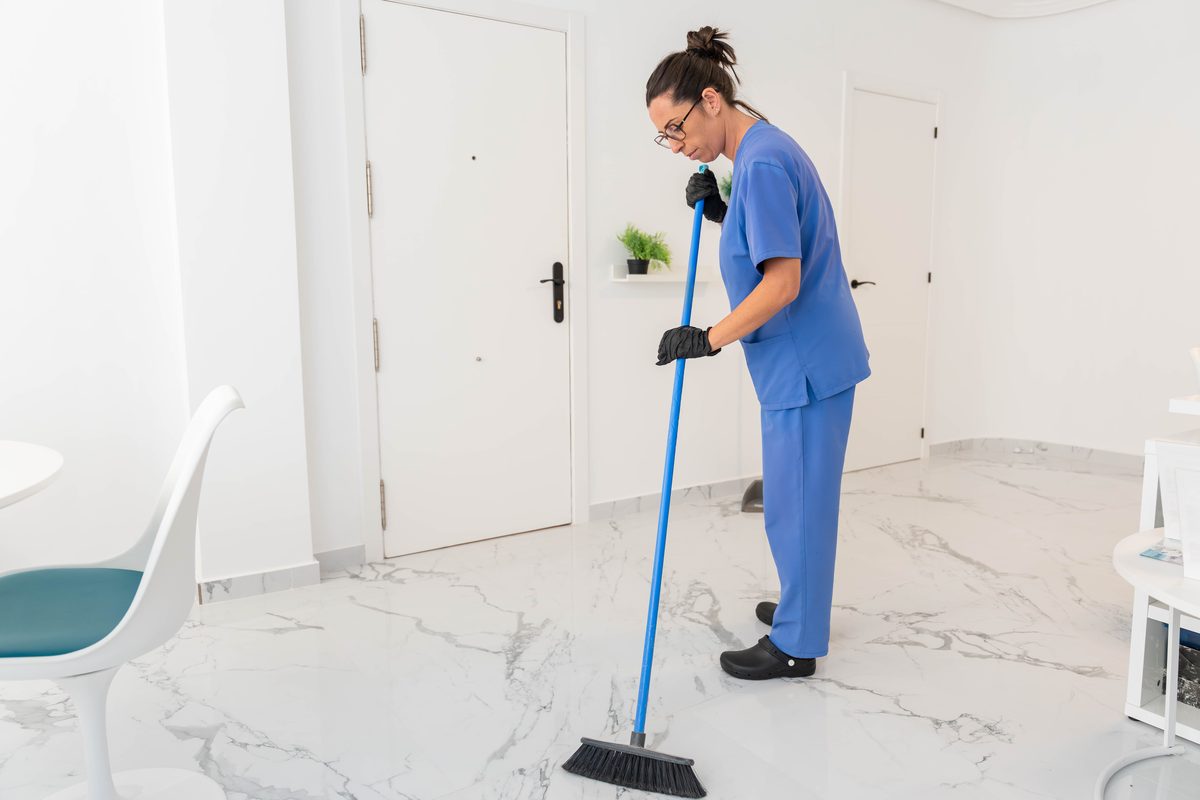
Healthcare spaces in Charlotte are held to a higher standard of cleanliness than ordinary commercial buildings. Patients, providers, and visitors all rely on a carefully sanitized environment to limit infection risk and support healing. This guide outlines the core standards behind effective medical facility cleaning in Charlotte.
What Sets Medical Cleaning Apart
General janitorial work aims for appearance; healthcare cleaning aims for safety. Infection control, cross-contamination prevention, and regulatory compliance shape every task, from waiting rooms and exam suites to restrooms and the high-touch surfaces in between.
1. Use EPA-Registered Disinfectants the Right Way
Household products are not enough for a clinical setting. Medical facilities need EPA-registered disinfectants labeled for the germs that matter in a clinic. Just as important, crews must respect label dwell times so each product performs as intended.
2. Keep Restroom and Patient-Area Tools Apart
Keeping the cloths and mop heads used in restrooms out of exam rooms and patient areas keeps germs from traveling between spaces. This simple habit is part of professional medical facility cleaning services.
3. Give High-Touch Surfaces Constant Attention
Door handles, light switches, exam tables, chair arms, and reception counters are touched hundreds of times a day. They are disinfected on every cleaning visit, and a day porter or your staff can wipe them again during clinic hours.
4. Train Crews on Pathogens and Protective Equipment
Anyone working in a medical environment should understand OSHA guidelines, bloodborne pathogen safety, and the correct use of personal protective equipment. Proper training safeguards your patients, your staff, and the cleaning team itself.
5. Keep Documentation Inspection-Ready
Many accredited practices must present cleaning records during inspections. A professional cleaning partner supplies written schedules, task checklists, and quality-assurance reports that make compliance easy to demonstrate.
Partner With Blue Oak Solutions for Medical Facility Cleaning in Charlotte
Blue Oak Solutions understands what healthcare environments demand. Our background-checked, fully insured crews follow rigorous protocols to keep your practice safe, sanitary, and welcoming for every patient. Contact our team to learn more about medical facility cleaning services in Charlotte, NC.
The same written standards apply to our commercial cleaning in SouthPark and in Ballantyne.
Frequently Asked Questions
How is medical facility cleaning different from standard office cleaning?
Healthcare cleaning centers on infection control and the prevention of cross-contamination. It calls for EPA-registered disinfectants left wet for the full contact time on the label, separate cloths for restrooms and patient areas, and careful attention to every high-touch surface.
How frequently should medical offices be cleaned?
Most Charlotte medical offices need daily cleaning, with high-touch surfaces disinfected on every cleaning visit. Deeper terminal cleaning should follow a set schedule based on patient volume and services offered.
Are Blue Oak Solutions crews trained for healthcare settings?
Yes. Our crews are trained, uniformed and background-checked. In clinics they clean first and then disinfect with EPA-registered products, keep restroom cloths out of patient areas, and leave sharps and medical waste to your staff.
What does healthcare facility cleaning in Charlotte include?
A written plan covers each kind of room: reception and waiting areas, exam and treatment rooms, restrooms, break rooms and offices. Door handles, light switches, counters, chair arms and other high-touch surfaces are disinfected with EPA-registered products, floors are vacuumed and mopped, and trash is removed. Clinical staff keep sharps containers and regulated medical waste, which goes to a licensed medical waste hauler. Visits happen on weekday evenings and weekends, after patients leave.