
A dental practice needs two kinds of cleaning, done by two different groups of people. Your dental team handles everything that touches patients and instruments. A janitorial crew cleans the building around that work. Most problems with dental office cleaning in Charlotte, NC start when nobody has written down where one job stops and the other begins, so a task gets done by both, or by neither. This guide sets out who does what, room by room, and how to put it in writing. It builds on our page for medical and dental office cleaning.
Two Kinds of Surfaces, Two Kinds of Cleaning
CDC's dental infection-control guidance sorts a practice's surfaces into two groups. Clinical contact surfaces, such as light handles, bracket trays, switches on dental units and computer equipment, are likely to be contaminated by direct spray or spatter during procedures. CDC recommends protecting them with surface barriers that are changed between patients, or cleaning and then disinfecting them with an EPA-registered hospital disinfectant. Housekeeping surfaces, such as floors, walls and sinks, do not come into contact with patients or with the devices used in dental procedures, and CDC says they can be cleaned with soap and water, or cleaned and disinfected if visibly contaminated with blood.
That split is the line in your cleaning scope: clinical contact surfaces stay with your team, and housekeeping surfaces, plus the counters, handles and switches around the building, go to an evening crew. ADA News describes the same arrangement for contracted cleaning: the contract covers floors, counters, bathrooms, reception and sinks, and the cleaning company stays away from the dental equipment.
What Stays With Your Clinical Team
Some work belongs to trained dental staff, and a good scope says so in plain words:
- Operatory surfaces between patients. Your team changes barriers and cleans and disinfects clinical contact surfaces before the next patient sits down.
- Instrument reprocessing and sterilization. CDC says cleaning, disinfection and sterilization of dental equipment should be assigned to dental staff trained in the reprocessing steps, and that sterilizers should be monitored. The crew does not touch instruments or run the sterilizer.
- Sharps and regulated waste. OSHA's bloodborne pathogens standard says sharps containers must be replaced routinely and not allowed to overfill, and CDC says they should be disposed of according to state and local regulated medical waste rules. Your team and the hauler your practice uses handle both. The crew empties regular trash and recycling and leaves anything marked as biohazard where it is.
- Blood and other spills during the day. OSHA's standard calls for surfaces to be decontaminated with an appropriate disinfectant immediately or as soon as feasible after a spill of blood or other potentially infectious materials. A spill is handled when it happens, not at the next evening visit.
- Equipment, medications, lab work and patient records. The crew cleans around them and does not move them.
What the Evening Crew Cleans, Room by Room
After your last patient leaves and your team has finished chairside cleanup, the crew works through the building.
- Entrance and waiting room. Entry glass, door handles, push plates, chair arms and seats, side tables and the check-in counter are cleaned, and the high-touch points are then disinfected. If you have a children's corner, the scope says who wipes down the toys.
- Front desk and checkout. Counters, card readers, phones and keyboards are wiped with a product that is safe for electronics. The crew cleans around papers, charts and files without moving them, and screens stay as staff left them.
- Patient restrooms. Toilets, sinks, faucets, flush handles, grab bars and dispensers are cleaned and disinfected, paper and soap are restocked, and floors are mopped.
- Hallways. Floors, door handles, light switches and the trash bins along the route.
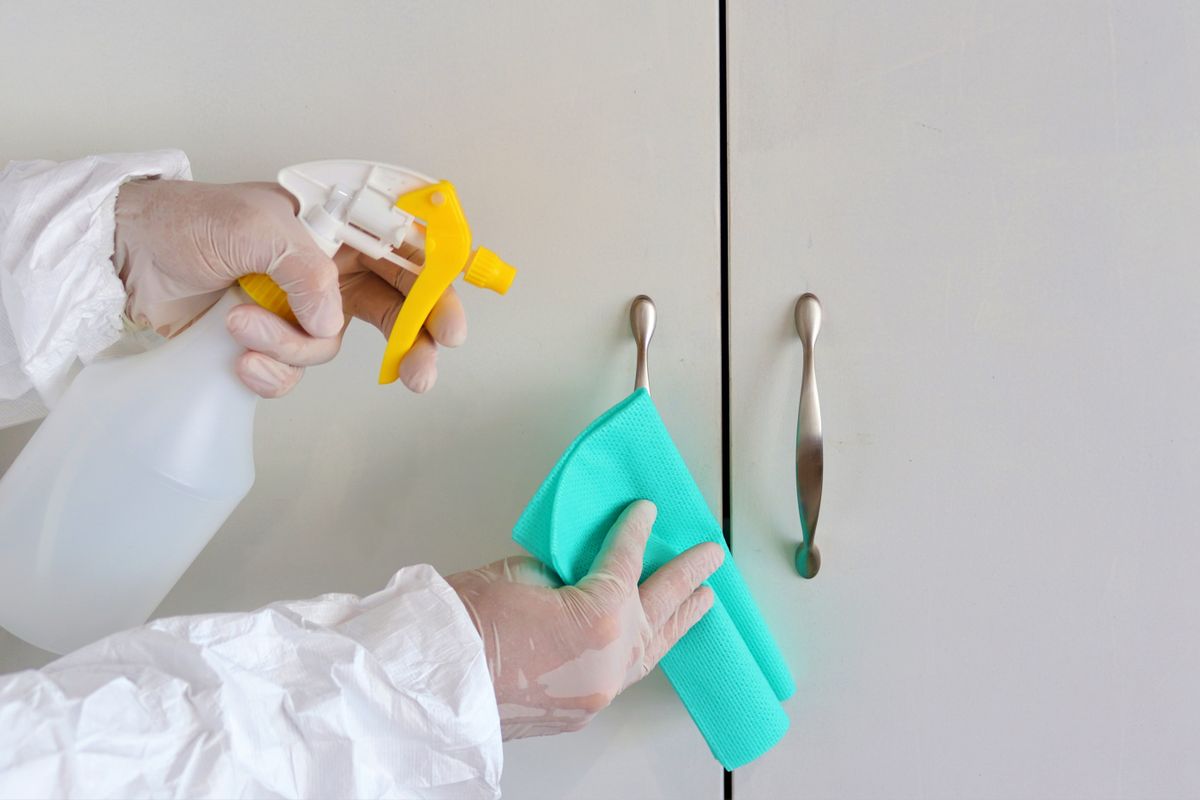
- Operatories, at the end of the day only. Once your team has cleared trays, instruments, sharps and anything else clinical, the crew cleans the housekeeping surfaces: sinks, counters, cabinet fronts and handles, door handles, wall switches, guest chairs and floors. The dental chair, delivery unit, operatory light, handpieces, suction and computer equipment stay with your team.
- Sterilization and lab areas. The scope states exactly what the crew does here, and many practices keep it short: regular trash and floors on set days. The crew does not touch sterilizers, instrument packs, trays or lab equipment.
- Break room and staff restrooms. Counters, tables, sinks, appliance handles, trash, and staff restrooms cleaned like the patient restrooms.
- Floors. Vacuumed and damp mopped on every visit, so they are dry before your team returns.
Disinfectant, Contact Time and Your Equipment
Surface disinfectants are pesticides registered with the EPA, and EPA tells users to read the label first: it says where the product can be used and how long it takes to work. The contact time is how long the product must stay on the surface, and the surface should stay visibly wet for all of it. Blue Oak Solutions uses EPA-registered disinfectants, along with eco-friendly products for everyday cleaning, and cleaning after your patients have gone home lets surfaces stay wet for the full contact time. If an equipment maker limits what can touch its surfaces, say so at the walkthrough. ADA News advises that a cleaning contract name the EPA-registered products to be used. For added treatments, see our disinfection services.
How to Write the Scope With Your Practice
OSHA's bloodborne pathogens standard requires employers to set a written schedule for cleaning and a method of decontamination, based on the location, the type of surface, the type of soil and the tasks performed in each area. That plan belongs to your practice, and the cleaning scope should sit alongside it. At the walkthrough with your office manager, settle these points:
- Each room, marked as clinical team, crew or shared, with the surfaces in it.
- The task and how often it happens in each area, so every task is assigned once.
- Locked rooms and cabinets, and the equipment the crew must not touch.
- Your end-of-day routine before the crew arrives: trays cleared, sharps and regulated waste secured, charts put away, screens locked.
- Access: keys or codes, alarm instructions, and one contact on each side. ADA News flags alarms as a security concern and names the office manager as the main contact.
- What the crew does if it finds a spill or a full sharps container: leave it in place and tell your contact.
- The disinfectant to be used, and any product your equipment makers restrict.
With the scope in writing, a supervisor can check each visit against the checklist. Our medical office cleaning page lays out the same split.
Switching Cleaning Companies Without a Gap
If your present crew misses tasks, or your scope was never written down, you can change companies without a break in service. Start with the written scope above and give every company the same one to quote against. Agree the start date with the new company before you give notice, and line it up with the end of your notice period. On the old crew's last day, collect keys and access codes and change the alarm code, then issue new ones to the incoming crew. For a dental practice, add one step: walk the operatories with the new supervisor so both sides know which surfaces the crew may touch. Our guide on how to switch commercial cleaning companies covers contracts and notice periods.
Cleaning an Orthodontic Office
Orthodontic practices follow the same split between clinical and housekeeping surfaces, with a different floor plan. Many have an open treatment bay with several chairs in one room, a consultation room, an imaging or scan area, and a waiting room that sees families and children all day. Our crew cleans the housekeeping surfaces in the treatment bay (floors, walls, sinks, counters away from the chairs, door handles and light switches), cleans and disinfects the waiting room, check-in counter, chairs and any play area, and services the restrooms and break room. The chairs, lights, bracket trays and anything else that touches patients stay with your clinical team, exactly as in a general dental office. Because the crew comes in on evenings and weekends, cleaning never works around patient appointments.
Dental Office Cleaning Beyond Charlotte
The same scope works for general dental and orthodontic practices in nearby towns. Each town page lists medical and dental practices among the businesses we serve: dental office cleaning in Matthews, Huntersville, Mooresville, Statesville, Concord, Gastonia, Hickory, Fort Mill and Rock Hill.
Dental Office Cleaning With Blue Oak Solutions
Blue Oak Solutions is family-owned and locally operated, based in Charlotte, with more than 10 years serving businesses in North Carolina and the Charlotte region. The company is licensed, insured and bonded. Our trained, uniformed, background-checked employees clean on weekday evenings and weekends, and a supervisor checks the work against your written checklist. Dental practices use our commercial cleaning and janitorial services for the building, office cleaning for the front office, and a day porter for restroom and waiting-area checks while the practice is open. For more on what medical settings expect, read our guides on medical office cleaning in Charlotte and medical facility cleaning standards. Request a free walkthrough and written estimate.
Frequently Asked Questions
Does the cleaning crew sterilize instruments or clean the sterilization room?
No. CDC says cleaning, disinfection and sterilization of dental equipment should be assigned to dental staff trained in those steps, so instruments and the sterilizer stay with your team. If your scope includes the sterilization area at all, it is limited to regular trash and floors on set days.
Does the crew handle sharps containers or regulated medical waste?
No. Sharps containers and regulated medical waste stay with your clinical team and the hauler your practice uses, under state and local rules. The crew empties regular trash and recycling and leaves anything marked as biohazard in place.
What does the crew clean in the operatories, and when?
At the end of the day, after your team has cleared trays, instruments and sharps, the crew cleans sinks, counters, cabinet fronts and handles, door handles, wall switches, guest chairs and floors. The dental chair, light, delivery unit, handpieces and computer equipment stay with your team.
How often does a dental office need cleaning?
It depends on patient volume, the number of operatories and restrooms, and your hours. A practice with a busy waiting room is usually cleaned after each day of appointments, and a smaller practice may do well with fewer visits. Visits are on weekday evenings and weekends, and the days are set at the walkthrough and written into your scope.
How do we switch cleaning companies without a gap in service?
Write down the scope first, agree a start date with the new company before you give notice, and line it up with the end of your notice period. Collect keys and codes from the old crew on its last day, change the alarm code and issue new access to the incoming crew.