
A senior living community is a workplace and a home at the same time. Residents are there in the evening when most offices are empty, many of them walk with a cane or a walker, and some are sensitive to noise, strong smells and changes in routine. Good senior living cleaning in Charlotte, NC starts with that fact. This guide explains what an outside janitorial crew should handle, what stays with your own team, and how to write a scope that keeps floors safe and residents comfortable. It builds on our pages for commercial cleaning and janitorial services.
Start With Who Does What
Most communities already have staff for resident care, and many have their own housekeepers for apartments. An outside crew is the right fit for the shared spaces and the business side of the building. A clear split prevents the two most common problems: a task done twice, or a task nobody owns.
- Usually the janitorial crew: lobbies and reception, hallways and stairwells, elevators, activity and media rooms, fitness and therapy rooms, public restrooms, offices for administration and sales, staff break rooms, and trash and recycling from all of them.
- Usually your own team: resident apartments (unless your scope adds them), anything involving medications, medical waste and sharps, laundry, and any clinical procedures in a wellness clinic.
- Decide in writing: wellness clinic rooms, memory care common areas, salons and chapels, and who restocks paper goods and soap.
Floors First: Cleaning That Prevents Falls
CDC lists falls as the leading cause of injury among adults 65 and older, so floor care in a senior community is a safety task before it is a cleaning task. A crew should work in sections and keep a dry path open at all times, so a resident who comes out of an apartment at night never meets a wet hallway from wall to wall. Wet floor signs go out before the mop does and come back in only when the floor is dry.
- Dry walkways: clean one side of a hallway at a time and use the least water that gets the floor clean.
- No cords across paths: equipment cords run along walls, never across a hallway or doorway.
- Entry mats: vacuum and straighten them every visit, since a curled corner is a trip hazard.
- Spills reported: anything the crew cannot fix, such as a loose threshold or a torn mat, goes on the visit report the same night.
Touch Points: Handrails, Grab Bars and Buttons
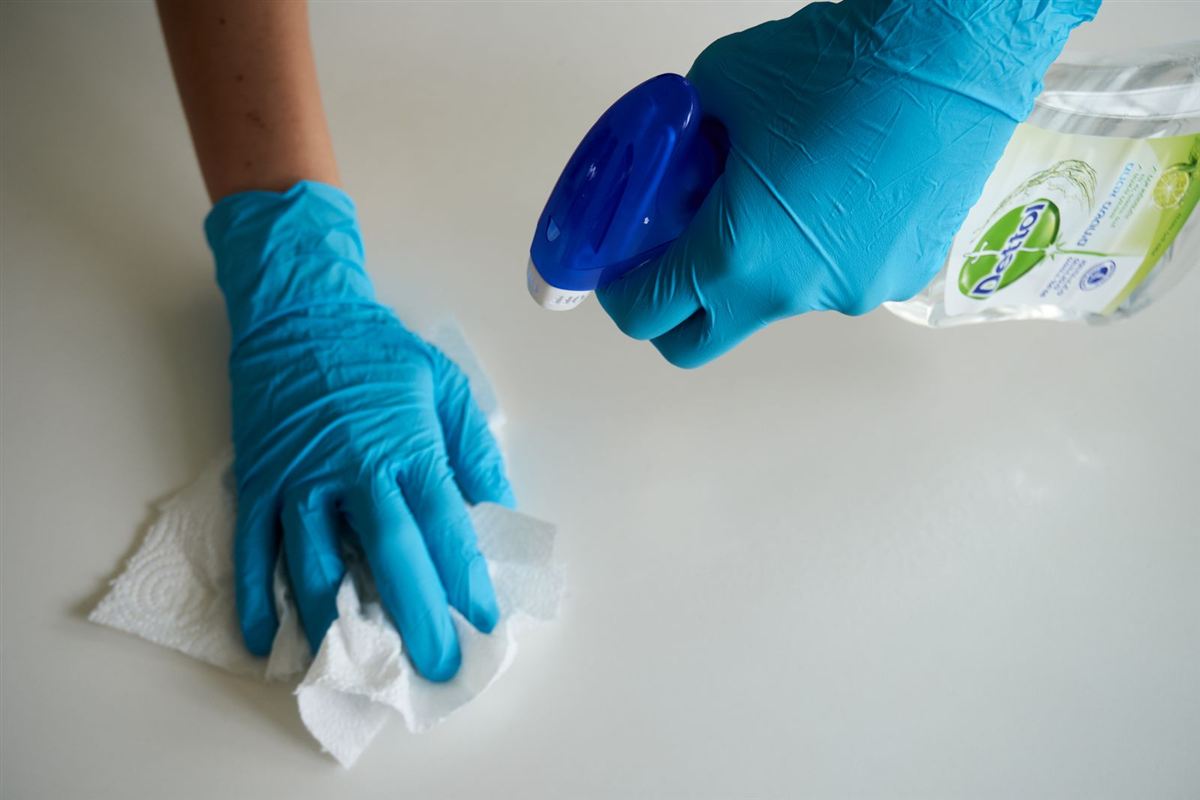
Residents steady themselves on handrails, door handles, grab bars and elevator buttons all day, which makes those surfaces the most important ones to disinfect. Use an EPA-registered disinfectant and follow the contact time printed on its label: the surface has to stay wet for that many minutes for the product to work as claimed. Spraying and wiping straight away is the most common shortcut, and the label explains why it fails.
- Handrails along every hallway and stairwell, end to end.
- Elevator call buttons, inside panels and the rails in the car.
- Door handles and push plates at common rooms, offices and restrooms.
- Grab bars, faucet handles, flush levers and dispensers in public restrooms.
- Tables, chair arms and remote controls in activity and media rooms.
For extra protection during cold and flu season, many communities add disinfection services to the regular plan for a few weeks at a time.
Quiet, Gentle and Predictable
Because residents are home in the evening, the crew is a guest in their house. Choose quieter equipment, avoid strong fragrances, and ask for fragrance-free or low-odor products where residents are sensitive. Greener products that still meet the disinfection need are a good fit for common rooms. In memory care areas, the same faces at the same times work better than a rotating crew, so ask your provider to keep the team steady.
Plan the order of work around the evening. Offices and the business side can be cleaned first, while residents finish their day; hallways and lobbies come later, when traffic is light. A crew that announces itself, says good evening and keeps carts out of the way earns trust quickly.
Writing the Scope
A good scope lists every area with a frequency, so nothing is left to memory:
- Every visit: touch points disinfected, public restrooms cleaned and restocked, trash removed, floors cleaned in sections, entry glass wiped.
- Weekly: baseboards in high-traffic hallways, elevator tracks, chair legs and table bases in activity rooms.
- Monthly: vents, ledges and high dusting, done on a weekend when activities are fewer.
- Reporting: a short visit log, plus any safety issue the crew notices.
If your front desk and lobby need attention while the community is busy, a day porter can cover restroom checks and spills during the day, while the evening crew does the full clean. Administration offices fit into the same plan through our office cleaning.
Choosing a Provider
Ask any company you are considering to show you a written scope that names your areas, to explain how they keep hallways dry and walkable, and to describe how they train crews to work around residents. Make sure the crew is employed by the company, background-checked and supervised, and that one person answers for your account. Our guide to choosing a commercial cleaning company in Charlotte has a longer checklist, and the commercial restroom sanitation standards guide covers the rooms that need the most care.
Blue Oak Solutions cleans senior living communities in Charlotte and across the region, including Hendersonville, Pinehurst, Huntersville and Matthews, on weekday evenings and weekends. We are family-owned, licensed, insured and bonded. Request a free walkthrough and written estimate.
Frequently Asked Questions
Does a janitorial crew clean resident apartments?
Only if your scope says so. Most communities keep apartments with their own housekeepers and use an outside crew for lobbies, hallways, activity rooms, public restrooms and offices.
How do you keep hallways safe while floors are cleaned?
The crew cleans one section at a time, keeps a dry path open, puts out wet floor signs first and runs cords along the walls, never across a walkway.
Which surfaces matter most in senior living?
Handrails, grab bars, door handles, elevator buttons and restroom fixtures, disinfected with an EPA-registered product left wet for the contact time on its label.
Can the crew use fragrance-free products?
Yes. Fragrance-free or low-odor products can be written into the scope for common rooms and any area where residents are sensitive to smells.
When does the cleaning happen?
On weekday evenings and weekends, with quieter areas and offices first and busier hallways later, when resident traffic is light.