
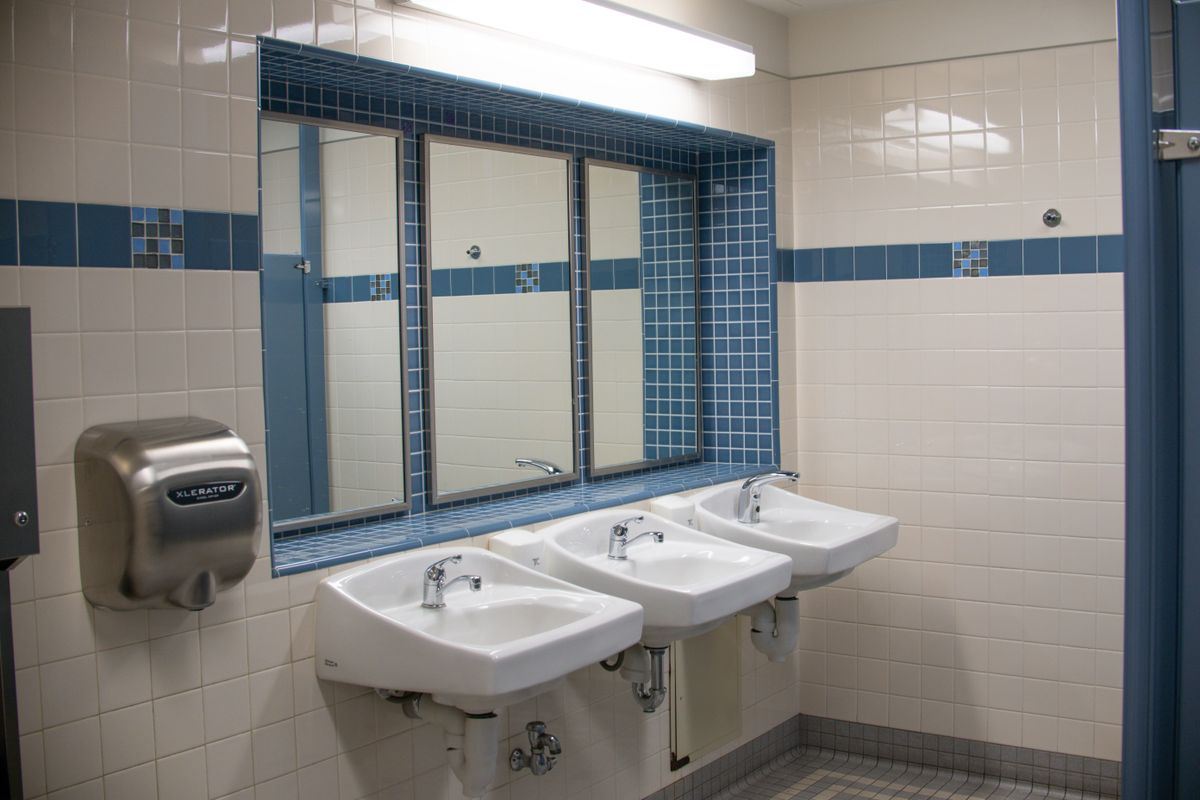
Nothing pushes a customer or employee to complain faster than a dirty commercial restroom. This is the room that visitors judge your entire business by — and it's also the room where corners get cut when a cleaning crew is behind schedule. Here's the standard a professional cleaning and disinfection program should meet in every Charlotte restroom.
1. The Touchpoint Map
Every commercial restroom has a long list of high-touch surfaces that are easy to miss: door handle (both sides), light switch, faucet handles, soap dispenser lever, paper towel dispenser lever, hand dryer button, stall latches, toilet paper roll bar, seat cover dispenser, coat hook, sanitary bin lid, mirror, diaper changing station latch. A good restroom checklist names every one of them so none gets skipped.
2. Dwell Time Is Not Optional
Every EPA-registered disinfectant has a required contact time on the label, and the surface has to stay wet for that whole time. Wiping a toilet down and drying it in 20 seconds doesn't disinfect anything; it just spreads bacteria evenly. Real dwell time is what separates "clean-looking" from actually clean. Our guide to cleaning vs. sanitizing vs. disinfecting explains which step each surface needs.
3. Two-Bucket Mopping
Rinsing a mop in the same bucket you clean with is how commercial restrooms end up smelling worse after cleaning than before. A two-bucket system uses one bucket for cleaning solution and one for rinsing, with fresh solution for each restroom.
4. Odor Control Isn't Air Freshener
Air freshener is a Band-Aid over an unclean floor drain, a dirty floor, or a urinal that hasn't been enzymatically cleaned in a month. Real odor prevention comes from regular enzymatic drain treatment and urinal descaling.
5. Consumables Stocking
Nothing signals "neglected building" like an empty soap dispenser. Evening service should re-fill soap, paper towels, toilet paper, and seat covers with backups stocked in the janitor closet. Set a re-order point so supplies are replenished before they run out. Federal rules back this up: OSHA's sanitation standard (29 CFR 1910.141) requires hand soap and individual hand towels or air blowers at every lavatory, and says all places of employment must be kept clean to the extent the nature of the work allows. Our guide to OSHA disinfectant rules in NC and SC covers the chemical side.
6. The Quality Check
The restroom is cleaned against a written checklist, touch points included, and quality checks and supervisory inspections help keep the work consistent from one visit to the next. If you want one, a sign-off sheet on the restroom door shows your staff when it was last cleaned.
Request a Free Charlotte Commercial Cleaning Quote
Blue Oak Solutions includes commercial restroom cleaning in Charlotte, NC and surrounding cities in our janitorial services plans, because the restroom is where your building is truly judged. Schedule a free walkthrough and we'll prepare a written estimate for your facility.
Frequently Asked Questions
How often should a commercial restroom be professionally cleaned?
Restrooms in busy offices or with public foot traffic should be cleaned every weekday. High-volume public restrooms may also need a day porter between evening cleanings, plus a weekly deep clean.
What causes a restroom to smell even after cleaning?
Floor drains, floor edges, and urinal traps hold organic residue that ordinary disinfectant doesn't remove. Enzymatic drain treatment and regular urinal descaling address most persistent odor problems.
Do you supply the paper products and soap or does the client?
It depends on the agreement. Some businesses have the cleaning company supply paper products and soap, while others buy their own and have the crew restock them. Settle it in writing before service starts.