
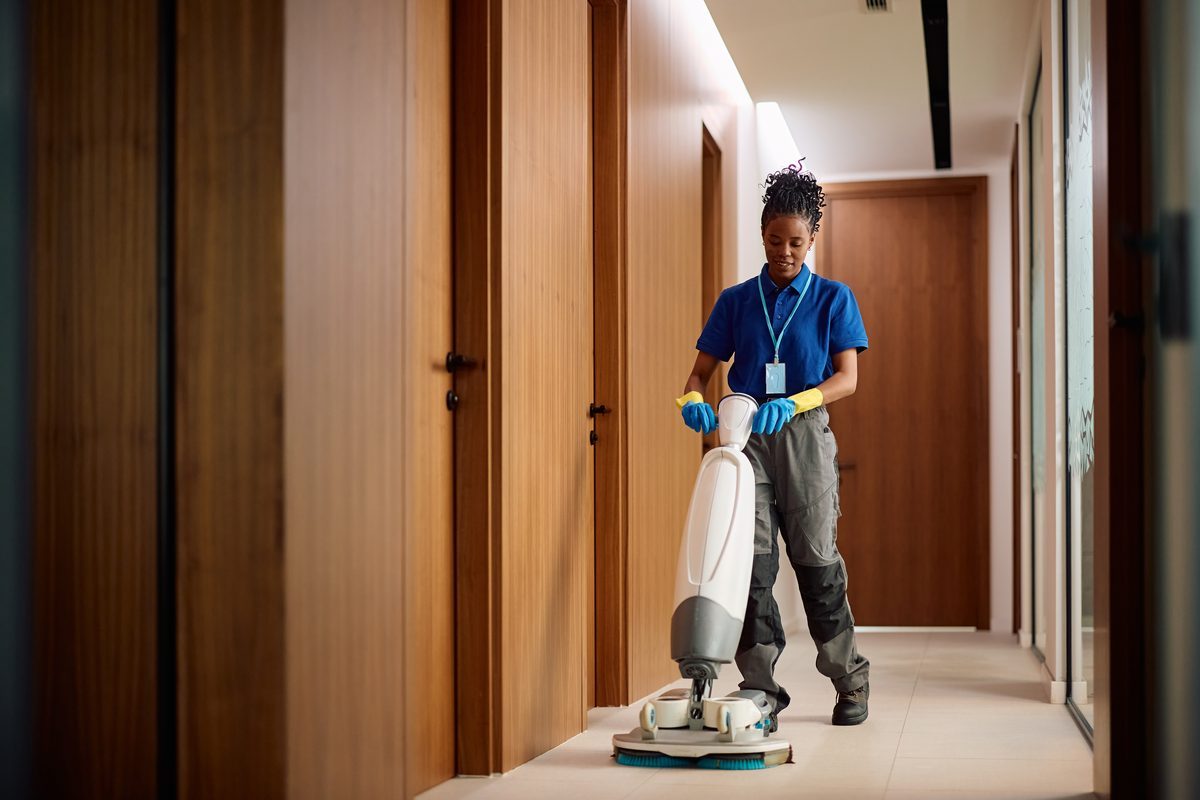
A building with many tenants is judged in the spaces everyone shares. A visitor walks through the lobby, rides the elevator and uses the restroom before they ever reach a suite. If those spaces look tired, every tenant hears about it. Cleaning a multi-tenant office building well comes down to three things: a clear split of who cleans what, a frequency for each kind of space, and a simple way for tenants to ask for help.
Who Cleans What: Common Areas vs. Tenant Suites
Most buildings follow one of three set-ups. The building cleans the common areas and each tenant hires its own cleaner for its suite. The building cleans everything, common areas and suites, under one contract. Or the building cleans everything but some tenants add extra work they pay for themselves. Your lease's janitorial section, or the building's cleaning specification, says which one applies. Read it before you ask for quotes, because a cleaning company can only quote and plan what is written down.
- Common areas (usually the building): entrances and entry glass, the lobby, elevators and elevator lobbies, hallways and stairwells, shared restrooms, mail areas, shared conference rooms and break areas, and the trash and recycling room.
- Tenant suites (the building or the tenant): offices, workstations, suite restrooms, kitchens and break rooms inside the suite, and private conference rooms.
- Decide in writing: empty suites waiting for a new tenant, a suite that has just moved out, paper goods and soap, and who handles a spill reported during business hours.
When one company cleans both the common areas and the suites, there is one crew, one checklist and one person to call. When suites are cleaned by different vendors, gaps appear at the borders: the hallway outside a suite door, a shared kitchen that two tenants use, or a restroom on a floor where nobody is sure who restocks it. Name those borders in the scope.
What the Rules Say About Shared Spaces
Federal workplace rules apply to hallways and stairs as much as to offices. OSHA's walking-working surfaces rule says that all "places of employment, passageways, storerooms, service rooms, and walking-working surfaces are kept in a clean, orderly, and sanitary condition" (29 CFR 1910.22(a)(1)). It also says surfaces are kept free of hazards such as "leaks, spills, snow, and ice" (1910.22(a)(3)). In a shared building that means wet entries on rainy days, a spill in the elevator lobby and a trash bag left in a stairwell are not only a look problem. They need an owner in the scope.
CDC's guidance for offices and other community buildings lists the surfaces to clean regularly, including "door handles, stair rails, elevator buttons, touchpads, restroom fixtures, and desks." It also says to clean surfaces before disinfecting them, and to disinfect areas where people have obviously been ill. In a building where hundreds of people press the same elevator buttons, those touch points belong on every visit.
A Frequency Plan by Space
Not every space needs the same attention. A good plan puts the most work where the most people go. Here is a starting point that we adjust after a walkthrough of your building:
- Every visit: shared restrooms cleaned, disinfected and restocked; lobby and entry glass; elevator buttons, rails, doors and floors; door handles and push plates; trash and recycling from common areas; floors vacuumed or mopped in the lobby and main hallways.
- Weekly: stairwells swept and rails wiped; mail area and shared conference rooms detailed; baseboards and corners in the lobby; spot cleaning of walls and doors.
- Monthly or quarterly: high dusting of vents and light fixtures; deep cleaning of restrooms; scheduled floor care for hard floors and carpet in the common areas.
- Suites: set per tenant. A busy medical or dental suite needs more disinfection than a small office with three people, and a law office may want its file rooms left alone.
Buildings with heavy foot traffic during the day often add a day porter who keeps the lobby, restrooms and break areas in order between the regular evening cleanings.
Working Around Many Tenants
Every tenant keeps different hours. One closes at five, another has staff working late, and a third comes in on Saturdays. We clean on weekday evenings and on weekends, and the plan should say which suites are cleaned in which order so the crew is not vacuuming outside a room where someone is still on a call.
- Access: agree how the crew gets in (key, fob or code), which suites are off limits, and which doors must be locked when the crew leaves.
- Privacy: the crew does not move papers on desks, open drawers or touch screens. Confidential rooms are listed in the scope.
- Security: lights off, doors checked and alarms set the way the building wants, every visit.
- Quiet first: suites that empty early are cleaned first; floors with people working late are done last.
How Tenant Requests Should Work
Most cleaning complaints in shared buildings are not about bad cleaning. They are about a request that went nowhere. Set up one path and tell every tenant about it:
- Tenants send requests to the property manager, not straight to the crew, so nothing gets lost and nothing outside the scope gets done for free in one suite and not another.
- The property manager passes them to one contact at the cleaning company.
- The cleaning company confirms the request, fixes it, and reports back on what was done.
- Extra work a tenant wants for its own suite, such as a deep clean before a client event, is quoted to that tenant in writing.
Ask for a short visit log or checklist the manager can see. When a tenant says "the restroom on three was not cleaned," you can answer with facts instead of guesses.
Turnover: Move-Outs and Move-Ins
Suites change hands, and an empty suite still collects dust, dead insects and stale air. Add empty suites to the scope with a light schedule, and plan a full clean when a tenant moves out so the space shows well to the next one. Our commercial move-out cleaning guide lists what that clean covers.
Questions to Ask a Cleaning Company
- Will you write a scope that names every common area and every suite you clean?
- How do you handle requests from tenants, and who is my one contact?
- What is on your checklist for elevators and shared restrooms?
- How do you handle keys, fobs and alarm codes?
- Can you add day porter service, disinfection or extra suite work when a tenant asks for it?
Our janitorial scope of work template is a good place to start writing the list, and our office cleaning and janitorial services pages show what each visit can include. For shared restrooms, see our restroom sanitation standards.
A Building Every Tenant Is Glad to Walk Into
Blue Oak Solutions is family-owned, locally owned and operated, and cleans office buildings across the Charlotte area on weekday evenings and weekends with eco-friendly products. We start with a walkthrough of your common areas and suites and write the scope with you, so every tenant knows what is covered. Request a free walkthrough and quote.
Frequently Asked Questions
Who is responsible for cleaning common areas in a multi-tenant office building?
In most buildings the landlord or property manager cleans the common areas: entrances, the lobby, elevators, hallways, stairwells and shared restrooms. The lease or the building's cleaning specification says for sure.
Do tenants have to hire their own cleaning company?
It depends on the lease. Some buildings clean the suites as part of the rent, some leave suites to each tenant, and some do both and let tenants add extra work they pay for themselves.
How often should shared restrooms in an office building be cleaned?
Shared restrooms should be cleaned, disinfected and restocked on every visit. Busy buildings often add a day porter to check them during business hours.
Can one cleaning company handle both the common areas and the tenant suites?
Yes. One company for both means one crew, one checklist and one contact, and no gaps at the border between a suite and the hallway. Each tenant's suite can still have its own scope.