
When one person comes to work sick, the rest of the office often follows. Cleaning cannot prevent every illness, since colds and flu also spread through the air and close contact. What it can do is reduce the germs people pick up from shared surfaces. This guide explains what to change in your office cleaning routine during the fall and winter months.
Cleaning, Sanitizing, and Disinfecting Are Different
Cleaning removes dirt and many germs using soap or detergent. Disinfecting uses a chemical product to kill germs that remain on a surface. Surfaces should be cleaned first, because dirt makes disinfectants less effective. For a fuller explanation, see our article on cleaning vs. sanitizing vs. disinfecting.
High-Touch Surfaces to Prioritize
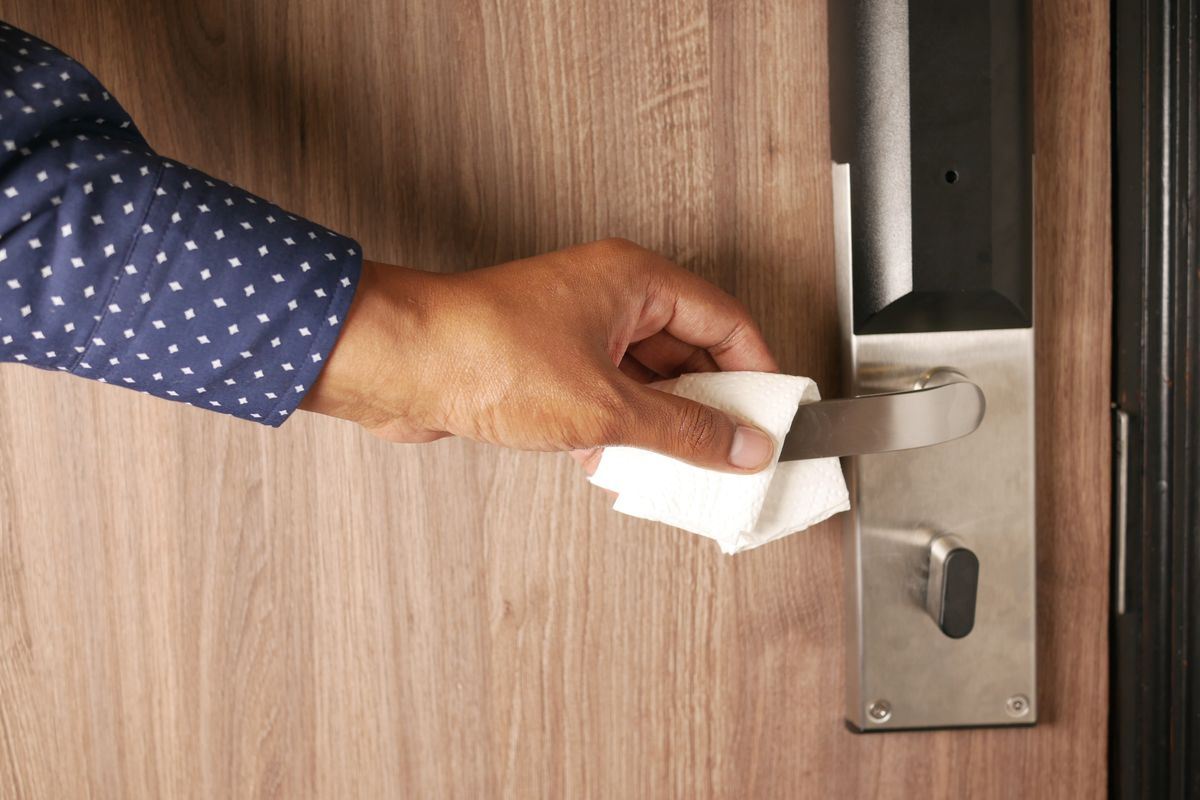
Germs spread through an office on the surfaces many people touch. These deserve attention on every visit during cold and flu season.
- Door handles, push plates, and handrails
- Light switches and elevator buttons
- Restroom faucets, flush handles, and stall latches
- Breakroom appliance handles, coffee makers, and water dispensers
- Conference tables and chair arms
- Shared phones, keyboards, copiers, and printers
- Reception counters, pens, and sign-in tablets
Contact Time Matters
A disinfectant needs to stay wet on the surface for the length of time stated on its label in order to work. Spraying and wiping immediately does not achieve that. Ask your cleaning company which products they use, whether those products are EPA-registered, and whether crews are trained to follow the label contact time.
What to Ask Your Cleaning Company to Adjust
- Disinfect high-touch points on every visit during the season
- Add a midday wipe-down of restrooms and breakrooms in busy offices
- Check soap, paper towels, and tissues more often
- Use separate, color-coded cloths for restrooms and other areas to avoid spreading germs
- Provide additional disinfection after an outbreak in the office
What Your Team Can Do
Your cleaning crew is in the building for a few hours. Your employees are there all day, so their habits matter just as much.
- Encourage people to stay home when they are sick
- Place hand sanitizer at entrances, in conference rooms, and in the breakroom
- Keep disinfecting wipes near shared equipment
- Keep desks clear at the end of the day so surfaces can be wiped
- Wash hands before eating and after using shared equipment
Facilities That Need Extra Attention
Some workplaces carry more risk because of who uses them or how closely people share space. Medical offices, schools, daycares, and gyms should review their cleaning schedule before the season begins.
After Someone Has Been Sick at Work
When an employee goes home ill, have their workstation and the shared surfaces they used cleaned and disinfected, including the phone, keyboard, chair arms, and nearby door handles. Tell your cleaning company the same day so it can be handled on the next visit.
Prepare Your Charlotte Office for the Season
Blue Oak Solutions can adjust your cleaning plan for cold and flu season or provide one-time disinfection. Request a free quote or call 980-307-4988.
Frequently Asked Questions
How often should high-touch surfaces be disinfected during flu season?
In most offices, high-touch surfaces should be disinfected on every cleaning visit during cold and flu season. Busy offices may benefit from an added midday wipe-down of restrooms and breakrooms.
Does disinfecting an office prevent the flu?
Not completely. Colds and flu also spread through the air and close contact. Disinfecting reduces germs on shared surfaces and works best alongside hand washing and employees staying home when they are sick.
What is disinfectant contact time?
Contact time is how long a disinfectant must remain wet on a surface to be effective. It is listed on the product label, and wiping the product off sooner reduces how well it works.