
When an Asheville office needs cleaning, the first choice is not which company to call. It is what kind of help to hire: a janitorial company with its own staff and supervisors, or an independent cleaner who runs the work alone. Both can do good work. They differ in insurance, coverage when someone is out, how the work is checked and what you get in writing. This guide explains each point plainly and gives you the questions to ask either one.
What is the difference between a janitorial company and an independent cleaner?
An independent cleaner is usually one person, sometimes with a helper, who cleans a handful of clients on a set schedule. You deal with that person directly for everything: the schedule, the supplies, the keys and any problem.
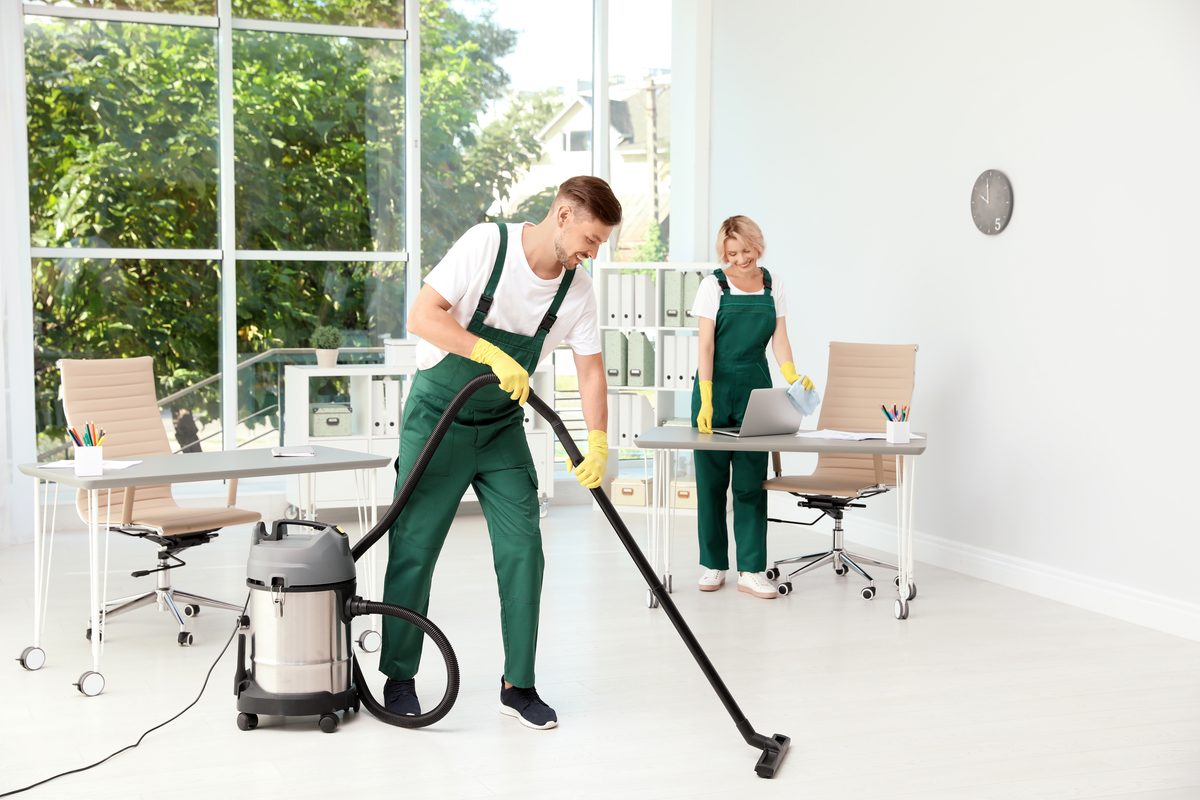
A janitorial company employs a team of cleaners, plus supervisors and office staff. Someone walks your space before the work starts, the tasks are written down, and a supervisor checks the work against that list. If you have a question, you call one contact at the company instead of waiting for the cleaner's next visit.
Who carries the insurance if something goes wrong?
This is the question most office managers skip, and it matters most. Two kinds of coverage are worth asking about. General liability insurance covers damage to your property, such as a broken fixture or a spill on equipment. Workers' compensation covers a cleaner who is hurt on the job.
In North Carolina, the Industrial Commission says that, in general, businesses employing three or more employees on a regular basis are covered by the Workers' Compensation Act, and that sole proprietors are not automatically counted as employees. In plain words, a one-person cleaning business may carry no workers' compensation policy at all. Ask every cleaner you talk to for proof of the insurance they carry, and ask whether they are bonded.
Blue Oak Solutions is licensed, insured and bonded, and our cleaners are our own trained, uniformed and background-checked employees.
Who cleans your office when the regular cleaner is out?
With one independent cleaner, a sick day or a vacation usually means a missed visit, and the trash and restrooms wait until the next one. Some independents have a friend who can step in, but that person may not know your building or have a key.
A company has other trained staff and a written task list for your building, so another employee can cover a visit and follow the same list. When you compare options, ask each one directly: "Who cleans my office when you cannot come?"
Who checks the work?
An independent cleaner checks their own work. That can be fine when the person is careful, but nobody else looks at the result unless you walk the office yourself.
A janitorial company adds a second set of eyes. At Blue Oak Solutions, every visit follows a written checklist, and supervisory inspections compare the finished work with your scope. When something is missed, you tell one contact, the item goes onto the crew's checklist and a supervisor confirms it has been handled.
Who supplies the products, and are they safe to use?
Cleaning products are chemicals, and someone has to know how to use them. OSHA's Hazard Communication standard says employers with hazardous chemicals in their workplaces must have labels and safety data sheets for their exposed workers and train them to handle the chemicals appropriately. A company with employees has to set that up. With an independent cleaner, ask what products they use and whether they can show you the safety data sheets.
Also settle who buys what. Most companies bring their own products and equipment, and the written scope says who supplies paper towels, toilet paper, soap and trash liners. Blue Oak Solutions uses EPA-registered disinfectants and offers green cleaning with eco-friendly products.
What should be in writing?
Whoever you hire, get the plan on paper before the first visit. A good written scope lists:
- Every area to be cleaned, room by room
- Each task and how often it is done: every visit, weekly or monthly
- Which evenings or weekend days the cleaning happens
- How the cleaner gets in and locks up
- Who supplies paper goods and trash liners
- Who to call with a problem and how it gets fixed
- How much notice either side gives to end the service
Our janitorial scope of work template shows a full example you can use with any cleaner.
When does an independent cleaner make sense?
An independent cleaner can be a good fit for a very small space with simple needs: one or two rooms, a single restroom, light use and an owner who is happy to manage the schedule and supplies. If you go this way, still ask for proof of insurance and a written task list.
When is a janitorial company the better choice?
A company usually fits better when any of these are true:
- Several people work in the office, or clients and patients visit every day
- You need cleaning several times a week without gaps
- Restrooms, break rooms and shared touch points need regular disinfecting
- You want one contact, written checklists and someone checking the work
- Your building has common areas, or you need help during the day as well
For offices that stay busy during business hours, a day porter can keep restrooms, the lobby and the break room in order while you are open. If you are also weighing a staff janitor, our guide to in-house vs. outsourced janitorial services covers that choice.
Questions to ask any cleaner in Asheville
- Can you show proof of general liability insurance and workers' compensation, and are you bonded?
- Who will be inside my office, and are they background-checked?
- Who cleans when you or your regular cleaner cannot come?
- Will I get a written scope that lists every task and how often it is done?
- What products do you use, and are your disinfectants EPA-registered?
- Who checks the work, and who do I call when something is missed?
Our guide on how to hire a janitorial service goes through the full hiring process step by step.
Cleaning for Asheville Offices and Nearby Towns
We provide commercial cleaning in Asheville, NC and in nearby Black Mountain, Fletcher, Mills River and Hendersonville. Professional offices, medical and dental practices and multi-suite buildings each get a plan written for that space. See our office cleaning services and janitorial services pages for everything we cover.
Request a Free Walkthrough
Blue Oak Solutions is family-owned, locally owned and operated, and we clean on weekday evenings and weekends so the work stays out of your way. We start with a free walkthrough of your space, then send a written scope and estimate you can compare with any other offer. Request a free walkthrough for your Asheville office.
Frequently Asked Questions
Is an independent cleaner cheaper than a janitorial company?
Sometimes, but compare the same scope. A lower price that leaves out insurance, supplies, supervision or coverage when the cleaner is out is not the same service. Ask both for a written task list and quote the same areas and the same number of visits.
Do independent cleaners need workers' compensation insurance in North Carolina?
The North Carolina Industrial Commission says that, in general, businesses with three or more employees must carry workers' compensation coverage, and that sole proprietors are not automatically counted as employees. A one-person cleaning business may therefore have no workers' compensation policy. Ask any cleaner, company or independent, for proof of the insurance they carry.
Can a small Asheville office use a janitorial company?
Yes. A janitorial company can clean a small office one or two evenings a week, with the tasks written down and a supervisor checking the work. The visit count follows the size and use of your space, not the size of the company.
How are janitorial services different from office cleaning?
Office cleaning covers the regular work inside an office: trash, restrooms, kitchens, dusting and floors. Janitorial services usually add more, such as restocking paper goods, common areas and day-to-day upkeep of a whole building. Our guide comparing office cleaning vs. janitorial services covers both side by side.